
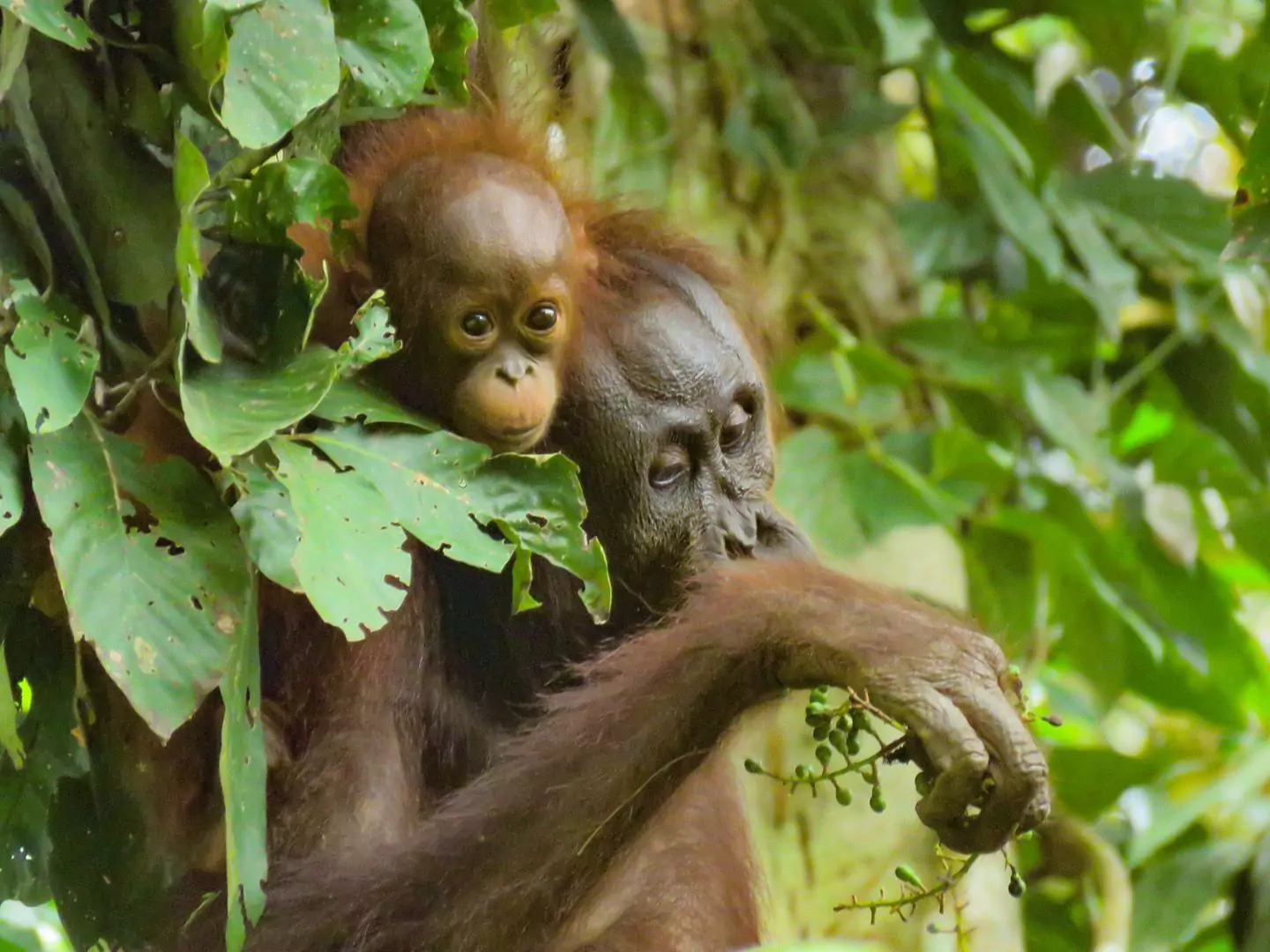

Bukit Piton – From Degraded Forest to Thriving Wildlife Haven
Written by Aleena Che Ramli
(Formerly Bike and Tours, now HAK’s Travel & Hospitality Group)
Location
Area: Bukit Piton Forest Reserve
Nearest City: Lahad Datu
Category IA: Strict Nature Reserve
Country: Sabah, Malaysia
Coordinates: 5°09' N / 118°00' E
Area: 11,612 hectares
Overview
Bukit Piton Forest Reserve, formerly known as Northern Ulu Segama, is located in east Sabah, along the upper part of the Ulu Segama River on the boundaries of the Danum Valley. It forms part of the Ulu Segama Malua Forest Reserve, which was formerly gazetted as a Class II (commercial) forest reserve. Later, in March 2012, it was re-gazetted as a Protection Forest Reserve (Class I), covering an area of 11,612 hectares. The vegetation consists mainly of logged-over lowland mixed dipterocarp forest, which has been under restoration since 2007.
Wildlife and Orangutan Habitat
Bukit Piton Forest Reserve is one of the most vital orangutan habitats in Sabah. The area hosts a high concentration of wild orangutan (Pongo pygmaeus morio), a species listed as endangered on the IUCN Red List (2000). According to WWF-Malaysia, Bukit Piton was estimated to have around 170 orangutans in 2007, which increased to 300 in 2008. This population is completely isolated from the larger group in the Ulu Segama Forest Reserve due to vast expanses of oil-palm plantations along the northern and eastern borders of the Segama River, forming a physical barrier between the two populations.
Forest Restoration Efforts
From 2007 to 2017, WWF-Malaysia, Yayasan Sime Darby, and the Sabah Forestry Department successfully restored approximately 2,099 hectares of the targeted 2,400 hectares of degraded orangutan forest habitat in northern Ulu Segama. Poor logging practices during the 1980s through 2007, combined with drought-induced forest fires in 1983 and 1997–1998, had caused severe degradation within the forest. Some parts were treeless, and the remaining areas suffered from poor tree cover and depleted wildlife habitats—especially for orangutans.
The ten-year restoration project recorded the planting of almost 300,000 trees from 99 species, serving as food sources for orangutans and other wildlife in Bukit Piton. Open and exposed areas were planted with fast-growing pioneer species such as Binuang (Octameles sumatrana) and Laran (Neolamarckia cadamba), while shaded areas were enriched with shade-tolerant dipterocarp species producing edible fruits, such as Sengkuang (Dracontomelon dao), Terap (Artocarpus sp.), and Figs (Ficus sp.).
Continued Rehabilitation through Ecotourism
In late 2016, HAK’s Travel & Hospitality Group (formerly Bike and Tours) and the non-profit organization Brothers Cycling from Switzerland began working with Kontraktor Fajar on an ongoing joint project to rehabilitate Bukit Piton through ecotourism and tree planting. The current reforestation initiative focuses on small-scale but consistent efforts, ensuring that every planted tree receives five years of maintenance for successful growth.
In contrast to earlier projects that focused mainly on the quantity of seedlings planted—often without budgeting for long-term maintenance—this approach emphasizes sustained care. Many previous initiatives failed when fragile seedlings were overgrown by creepers and parasitic plants, unable to access sufficient light and space to thrive.
Wildlife Recovery and Ecotourism Potential
Today, Bukit Piton has become an excellent site for wildlife spotting and birdwatching, particularly famous for sightings of wild orangutans in their natural habitat. An incredible diversity of wildlife has returned, including endangered Bornean pygmy elephants, slow lorises, Sambar deer, bearded pigs, northern Bornean gibbons, pig-tailed macaques, and numerous bird species such as the helmeted hornbill, Black-and-Crimson Pitta, Blue-headed Pitta, and Wallace’s Hawk-Eagle. This revival demonstrates that large-scale restoration can successfully rehabilitate severely degraded commercial forests and improve wildlife populations within protected areas.
Back to the Donors & Conservation Page — discover how reforestation, community action, and your contributions continue to transform Bukit Piton into a thriving wildlife sanctuary.

About the Writer
Aleena Che Ramli
🔎 Motivational Speaker | 🔎 Certified Professional Coach (TCI & IAC-MP) | 🔎 Accredited Trainer
A resilient and passionate professional who believes in living with vision, not just sight. Aleena combines her background in coaching and training with storytelling that inspires connection and purpose.