
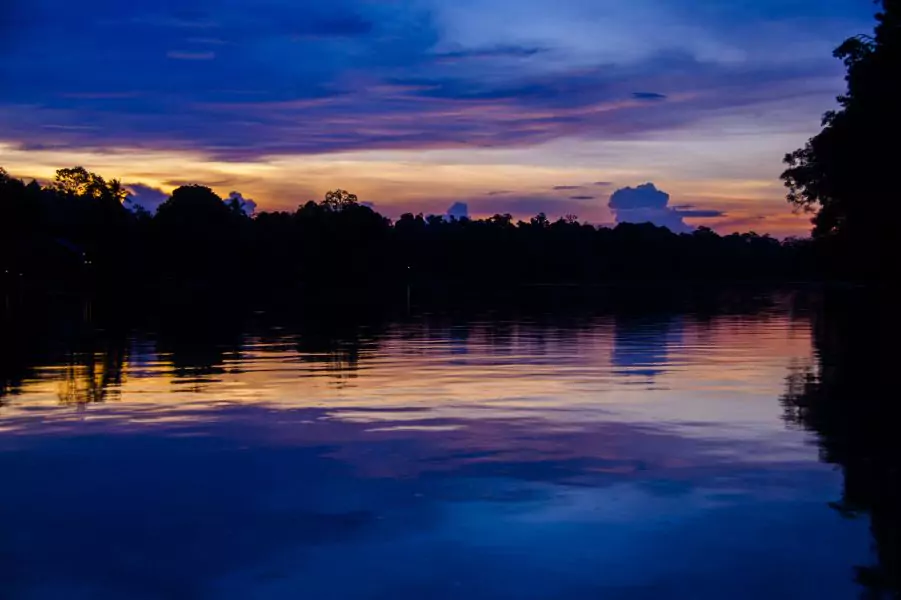

The Kinabatangan River in Sabah is one of Borneo’s most iconic wildlife destinations, where river cruises bring you face-to-face with rare animals and lush rainforest.
The Kinabatangan River is recognized as one of Southeast Asia’s top wildlife-watching destinations. Naturalists and travelers alike are spoiled for choice: scenic river cruises, jungle treks, and birdwatching excursions. These activities let visitors experience Borneo’s stunning wildlife and rainforest landscapes up close.
Kinabatangan River: Wildlife in Abundance
If you are an animal lover, the Kinabatangan River is the place to be. Its riverbanks and forests harbor an extraordinary concentration of wildlife, including Bornean pygmy elephants, orangutans, Irrawaddy dolphins, proboscis monkeys, silvered leaf monkeys, macaques, gibbons, crocodiles, and snakes.
The world’s largest reptile, the estuarine crocodile, also inhabits these waters. With more than 90 fish species—including freshwater rays once thought extinct—the Kinabatangan is among Malaysia’s most productive freshwater ecosystems.
Kinabatangan River: A Birdwatcher’s Paradise
With over 250 bird species, Kinabatangan is truly a paradise for bird enthusiasts. Iconic sightings include the purple heron, blue-banded kingfisher, Bornean Bristlehead, and the endangered Storm’s stork.
All eight species of hornbills can be observed here. Birders may also spot the Indian darter (Anhinga melanogaster)—an endangered waterbird extinct elsewhere in Malaysia—drying its wings along the river. Another highlight is the Bornean falconet (white-fronted falconet), a tiny raptor endemic to Sabah and considered one of the world’s smallest birds of prey. Although rare, it is regularly sighted in the Kinabatangan area.
Why Kinabatangan is Known as a ‘Mini Amazon’
Thanks to its unique ecology, the Kinabatangan River is often called a ‘Mini Amazon’. The river flows through a wide range of ecosystems, including:
- Lowland dipterocarp forests
- Limestone caves
- Riverine forests and oxbow lakes
- Freshwater swamp forests
- Mangrove swamps
Fed by a vast network of tributaries from the Crocker Range, the river eventually empties into the Sulu Sea. Altogether, these waterways drain more than 17,000 square kilometers. Along the banks, diverse flora such as bamboo, rattan, orchids, palms, fig trees, and hibiscus thrive—making Kinabatangan one of the richest regions to explore in all of Borneo.
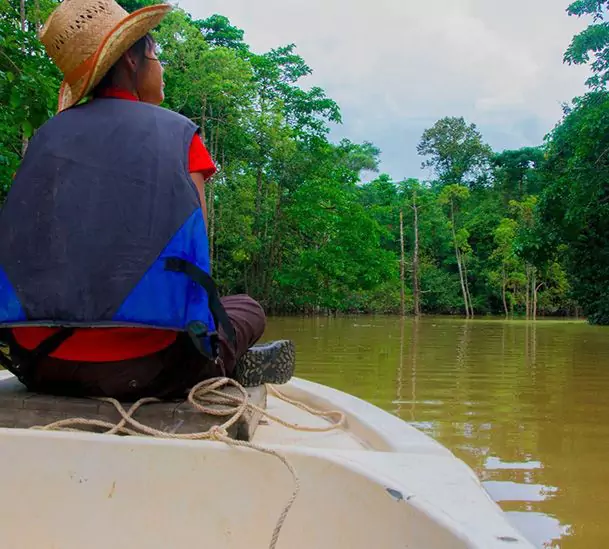
Kinabatangan River – Sabah’s Wildlife Corridor
Cruise along Sabah’s longest river and spot proboscis monkeys, pygmy elephants, crocodiles, and hornbills in their natural habitat. A haven for birdwatching and unforgettable wildlife encounters.