

The Secret of Borneo Pygmy Elephants
Written by Aleena Che Ramli
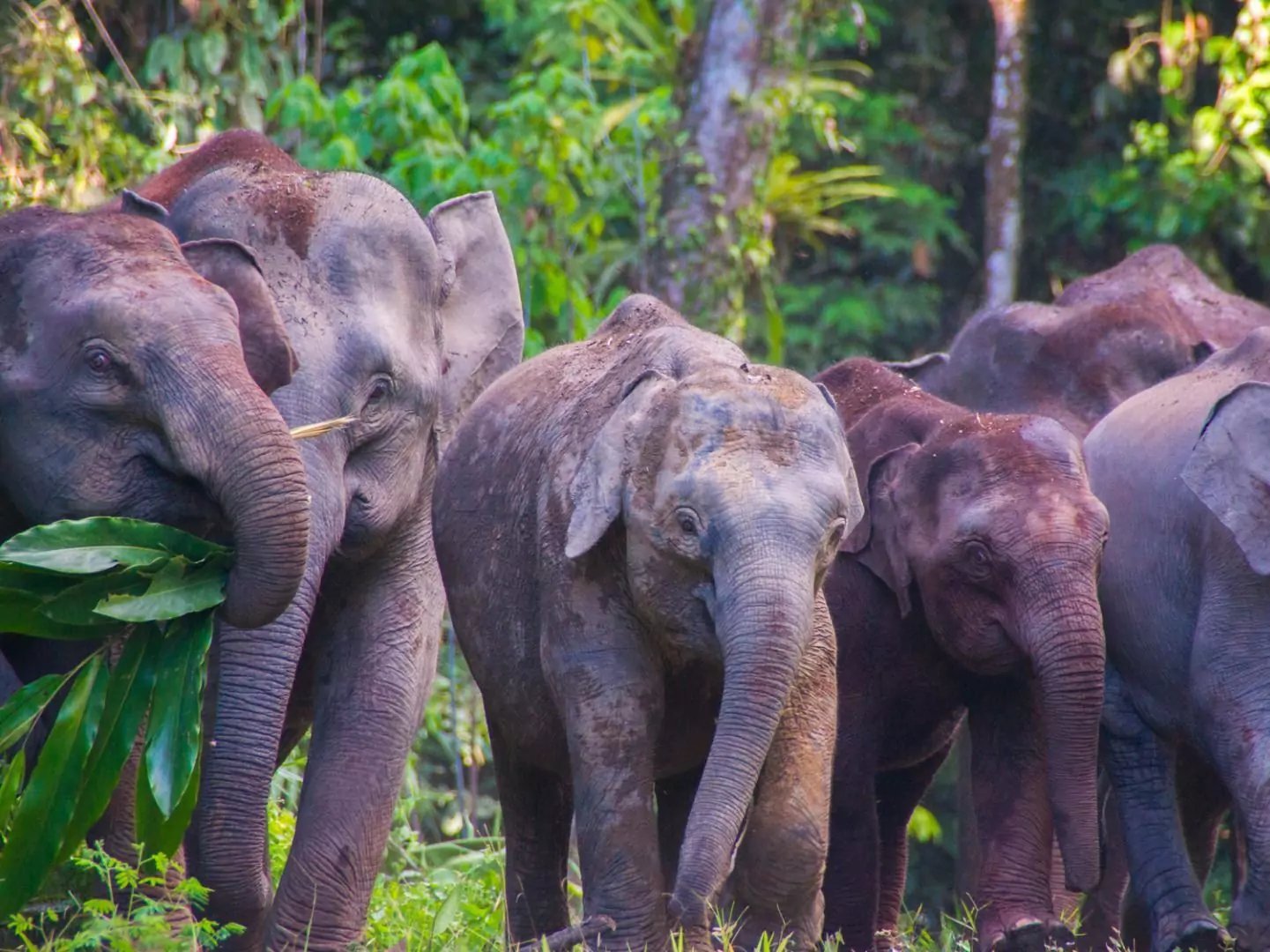
On the island of Borneo live pygmies of elephants whose origin remains a mystery. Known as the Bornean pygmy elephant (Elephas maximus borneensis), they are recognised as the smallest elephants in the world, inhabiting a small patch of tropical rainforest in Sabah, Malaysia and northern Kalimantan, Indonesia. It is estimated that only around 1,500 Bornean pygmy elephants remain in the wild, mostly concentrated in the northeast region of Sabah.
The Bornean pygmy elephant is one of four Asian elephant subspecies, genetically distinct from its relatives. Physically smaller and rounder, with larger ears, shorter tusks and longer tails, these gentle creatures are surprisingly agile and can run up to 26 miles per hour. Their endearing, baby-like appearance and mild temperament set them apart from other elephant species. Above all, they are defined by geography – found only in specific parts of Borneo’s forests.
Borneo, shared by Malaysia, Indonesia and Brunei, is a massive island separated from mainland Asia by the South China Sea. The elephants’ origin is still debated. One theory suggests they descend from elephants gifted to the Sultan of Sulu in the 18th century, later released into Borneo’s jungles. Another, supported by genetic research in 2003, indicates that they migrated naturally from mainland Asia during the last ice age. Yet another proposes descent from the extinct Javan elephants – meaning the Sultan of Sulu may have unknowingly saved their lineage.
Bornean pygmy elephants are social mammals living in matriarchal groups of 8–12 individuals, led by an older female. Males stay with their mothers until about age 8 before moving off to new herds. They live up to 60 years and give birth to a single calf every 4–6 years. As herbivores, they feed on palms, grasses, leaves and fruits, requiring vast tracts of rainforest to roam – sometimes up to 300 km² annually.
Unfortunately, their habitat is shrinking rapidly due to agriculture and human encroachment. Major threats include deforestation, habitat fragmentation, low genetic diversity and illegal killing. Between 2010 and 2017, GPS tracking revealed that elephants avoid roads and villages, preferring dense vegetation. Their migration routes are now blocked, limiting breeding and genetic exchange. Listed as Critically Endangered since 2013 on the IUCN Red List, only about 1,500 remain today.
Scientists believe Borneo’s young, infertile soil and lack of natural minerals may further restrict the elephants’ distribution. Typically found in lowland forests and river valleys, family herds prefer flat terrain while solitary males roam the hills. Protecting degraded forests rather than converting them into plantations is crucial for the elephants’ long-term survival.
How You Can Help
Sustainable ecotourism empowers local communities to protect wildlife instead of exploiting it through poaching or deforestation. By visiting responsibly and supporting conservation-minded operators, travellers help keep Borneo’s elephants and forests alive.
Where to See Bornean Pygmy Elephants in the Wild
Kinabatangan River
Just two hours from Sandakan, the Kinabatangan River offers the best chance to see pygmy elephants bathing or playing along its banks. Known as the “Corridor of Life”, it also hosts orangutans, proboscis monkeys and countless bird species. Evening river cruises reveal nocturnal wildlife and roosting birds under a canopy of stars.
Danum Valley
One of the oldest rainforests on earth, Danum Valley’s 130-million-year-old ecosystem shelters small herds of pygmy elephants roaming freely. Visitors can explore jungle trails and canopy walkways, or spot elephants along the access road to the Danum Valley Field Centre – a pristine environment far from human conflict zones.
Tabin Wildlife Reserve
Located in Lahad Datu, Tabin Wildlife Reserve is Malaysia’s largest protected area. Its mud volcanoes and salt licks attract numerous species, including pygmy elephants, orangutans and hornbills. After a day of trekking, guests at Tabin Wildlife Resort can unwind with a natural herbal foot soak and savour jungle tranquillity.
Deramakot Forest Reserve
Deramakot Forest Reserve spans 55,000 hectares of mixed dipterocarp forest and is home to 75 percent of Sabah’s mammals, including pygmy elephants, clouded leopards and banteng. Practicing sustainable logging and long regeneration cycles, Deramakot demonstrates how conservation and responsible resource use can coexist to protect Borneo’s unique wildlife.

About the Writer
Aleena Che Ramli
🔎 Motivational Speaker | 🔎 Certified Professional Coach (TCI & IAC-MP) | 🔎 Accredited Trainer
A resilient and passionate professional who believes in living with vision, not just sight. Aleena combines her background in coaching and training with storytelling that inspires connection and purpose.